Clinical Techniques
Clinical Conversation No. 22
Tunnel Vision Starts Before the Needle
By Dorian Vale · 5 min read
Published for Phlebotomy Students and Future Clinicians
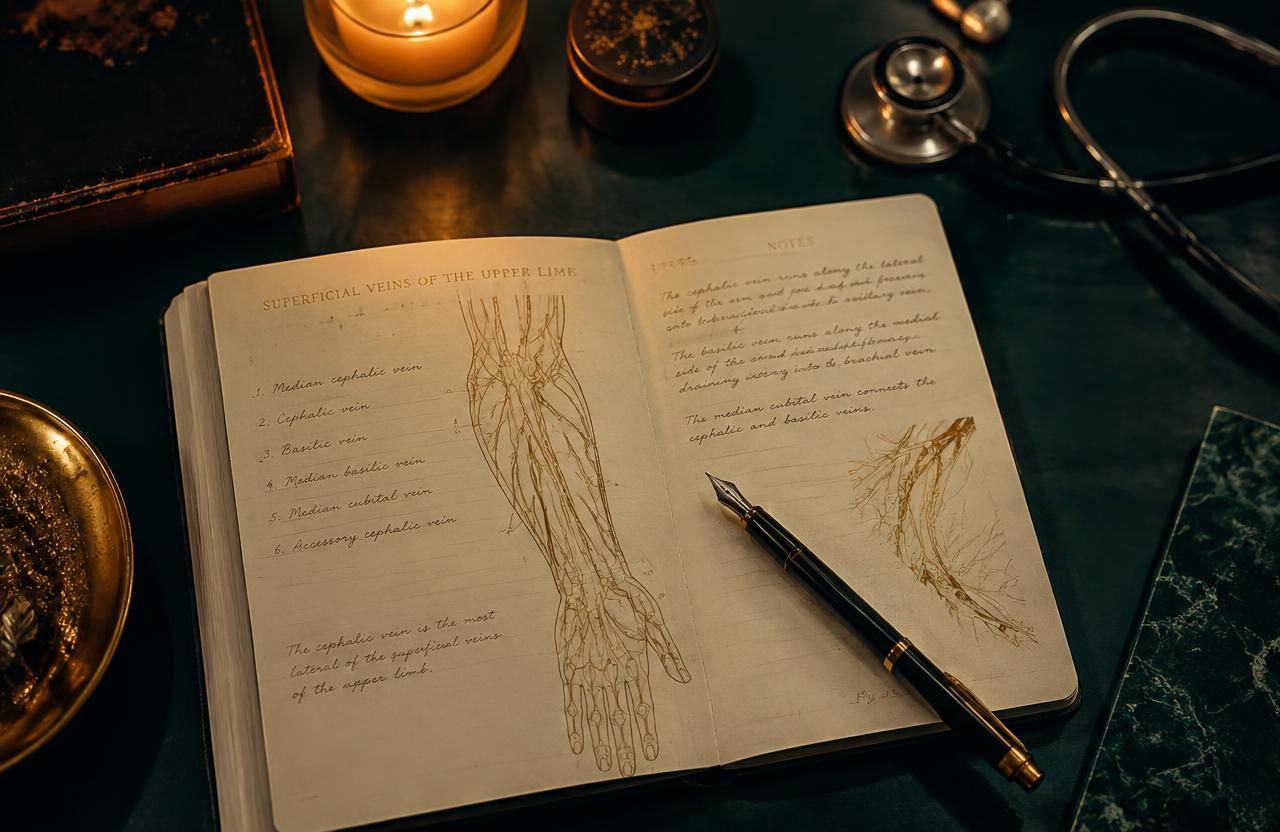
The First Vein You Saw
Was the vein you used on your last draw the best one in that patient’s arm, or just the first one you found? Most students have never stopped to ask, because the first vein usually feels like the answer the moment it appears.
The tourniquet goes on, and a thin vein pops up on top of the forearm — visible, a little wiggly, good enough. You commit right there, fight it through a slow, difficult draw, and afterward your instructor finds a full, bouncy median cubital on the other arm in about five seconds.
The First Parking Spot
You pull into a busy lot and grab the first open spot you see, way out at the far end, because it’s right there and you don’t want to lose it. Then you walk past three empty spaces by the front door on your way in.
Most students believe a good phlebotomist is one who finds a vein fast. The truth is that a good phlebotomist chooses a vein well — and loyalty to the first vein isn’t judgment.
That’s the line worth remembering. The first vein you find is just the first. It isn’t the best until you’ve compared it.
Why the First Answer Sticks
Once people settle on an option, they tend to stop searching and start looking for reasons the choice was right. Psychologists call it confirmation bias, and it’s why the moment a vein feels “good enough,” the rest of the arm quietly stops existing.
There’s a visual trap too. Students tend to choose the vein they can see, not the vein they can feel — and the most visible veins are often small, superficial, or prone to rolling, while the best ones sit a little deeper and announce themselves with a bounce under your finger.
Then the work starts. You palpate the same vein again, stretch the skin differently, adjust your angle, and fight to rescue the first choice, while a better option sits a few inches away, untouched. You end up working harder, not smarter.
Observe. Compare. Choose.
Discernment isn’t slow; it’s just complete. These three words turn vein selection into a decision instead of a reflex.
Observe. Don’t stop at the first vein. Look and feel across the whole antecubital area, and check the other arm when you can.
Compare. Put your best candidates side by side and ask, “Is this the best option, or simply the first one I noticed?” Size, bounce, direction, and how well it’s anchored all count.
Choose. Commit to the winner, fully and without second-guessing. Once you’ve chosen, stop re-checking — that’s a different trap, and it gets its own conversation next.
Before You Commit to a Vein
Good selection takes seconds, not minutes, once it becomes a habit. Build these into every assessment.
- Feel before you trust what you see: a vein that bounces under your finger usually beats one that’s merely visible.
- Find at least two candidates: even when the first looks great, locate a second so you’re choosing, not settling.
- Know the usual order of preference: the median cubital is generally the first choice because it’s well anchored and away from major nerves and arteries; the basilic is usually the last resort for that same reason.
- Rule out sites you shouldn’t use: scarred or hardened veins, bruised areas, an arm with an IV, and any site your facility’s policy excludes — such as the side of a mastectomy or an arm with a dialysis fistula.
- Check the other arm when you can: a few seconds of looking often saves a difficult draw.
Looking Again Isn’t Doubt
If you’ve ever wrestled a mediocre vein while a better one waited nearby, you’re in good company. Changing your plan before the needle moves isn’t indecision — it’s one of the clearest signs of clinical maturity.
Ask yourself these during your next few assessments. They take seconds, and they change the whole draw.
Am I evaluating, or defending my first choice?
Have I stopped looking too soon?
If I weren’t attached to this vein, would I still choose it?
The Same Arm, Looked at Twice
Back to that patient. The thin vein pops up on top of the forearm again, and this time you note it and keep looking — you feel the antecubital area, then check the other arm, where a full median cubital bounces back under your finger.
You choose it, commit, and the draw fills on the first try. Vein selection, assessment, and site choice are all laid out step by step in Phlebotomy: The Veteran’s Field Manual, so your choices come from a clear process instead of the first thing you see.
📘 Phlebotomy: The Veteran’s Field Manual
https://dorianvaleclinical.etsy.com/listing/4520590773
Don’t settle for the first spot. Choose the best one, then commit.
Educational disclaimer: This article is supplemental educational information and does not replace accredited training, current professional standards, institutional procedures, or supervised clinical instruction. Read the full disclaimer.
Related Articles
Clinical Techniques
The Anchor Mistake Students Don’t Notice Until It’s Too Late
How many times have you said those two words this month? The vein looked perfect, your angle felt right, and the moment the bevel touched it, the vein slid sideways like it had…
Read Article →
Clinical Techniques
The Wrist Freeze That Causes Students to Miss Veins
Your instructor demonstrates on the practice arm with the needle held so loosely it looks like it might slip out of her fingers. Her shoulders are down, her elbow hangs easy,…
Read Article →Clinical Techniques
The Vein Didn’t Disappear. Your Anchor Changed.
Most students believe disappearing veins are just bad luck — some patients have them, some don’t, and there’s not much you can do about it. Then they watch it happen enough…
Read Article →