Study Guides
The Nervous System Is Complicated. Studying Its Disorders Doesn't Have to Be.
A Visual Study Guide to Eight Categories of Nervous-System-Related Conditions
By Dorian Vale · 10 min read
It's late, the kitchen light is the only one still on, and your highlighter has started to streak across nearly every line in the textbook box. Concussion, polio, myasthenia gravis, schizophrenia — nearly two dozen terms read top to bottom like a grocery list, and you can pronounce every one without seeing how they connect.
That's the trap with a list. A tube that leaves the draw station without a label might hold perfect blood, but the lab can't accept it, process it, or tie it to a patient. A term memorized without its category is that same tube — full, and almost useless.
Memory works like that lab: new information sticks best when it can be filed beside something you already know. This guide labels nervous system disorders first — by where they live and what's going wrong — across eight study categories, not a formal medical classification.
In this guide
- Before You Start: Three Places a Problem Can Live
- 01 | Trauma: when force reaches the brain
- 02 | Stroke: blockage vs. bleeding
- 03 | Infection: where an infection settles
- 04 | Neoplastic disease: why location matters
- 05 | Degenerative disease: three different targets
- 06 | Autoimmune disease: one mistake, three addresses
- 07 | Developmental disorders: when timing defines the category
- 08 | Psychiatric illness: mood, thought, and the brain
- How to study without memorizing everything at once
Before You Start: Three Places a Problem Can Live
Many study charts file every condition here under "disorders of the central nervous system," but several don't belong there, and a wrong address follows you from exam day to the requisitions you'll read on shift. Where a condition lives is one of the most useful labels you can give it.
The central nervous system (CNS) is the brain and spinal cord. Stroke, multiple sclerosis, and Alzheimer's disease affect it directly.
The peripheral nervous system (PNS) is the network of nerves branching out to the rest of the body. Guillain-Barré syndrome and shingles mainly affect these nerves.
The neuromuscular junction is the handoff where a nerve signals a muscle to contract, using a chemical messenger called acetylcholine. Myasthenia gravis is a problem at that handoff, not in the brain or the nerve itself.
01 | Trauma: What Can Physical Force Do to the Nervous System?
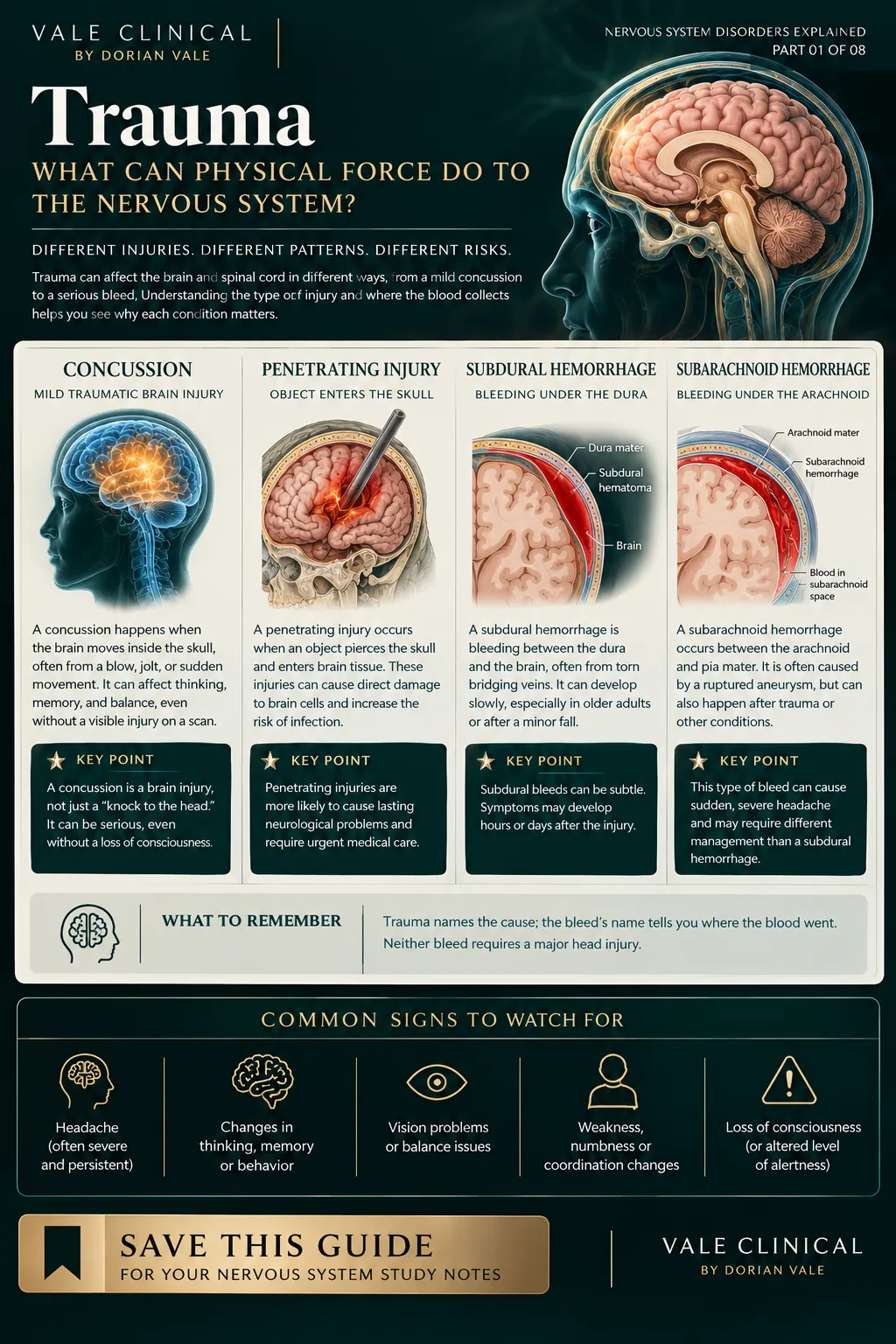
A concussion is a mild traumatic brain injury from a bump, blow, or jolt to the head or body — "mild" because it's usually not life-threatening, not because its effects can't be serious. A penetrating injury is different in kind: an object pierces the skull and enters brain tissue.
The two bleeds shown above are named for where blood collects: subdural under the dura, often from torn bridging veins, and subarachnoid beneath the thin arachnoid layer. Neither requires major trauma: a minor fall can cause a subdural hematoma in an older adult, and a ruptured aneurysm often causes subarachnoid bleeding with no injury at all.
What to remember: Trauma names the cause; the bleed's name tells you where the blood went. Neither bleed needs a major head injury.
02 | Stroke: Why Can a Blockage and a Bleed Both Cause a Stroke?
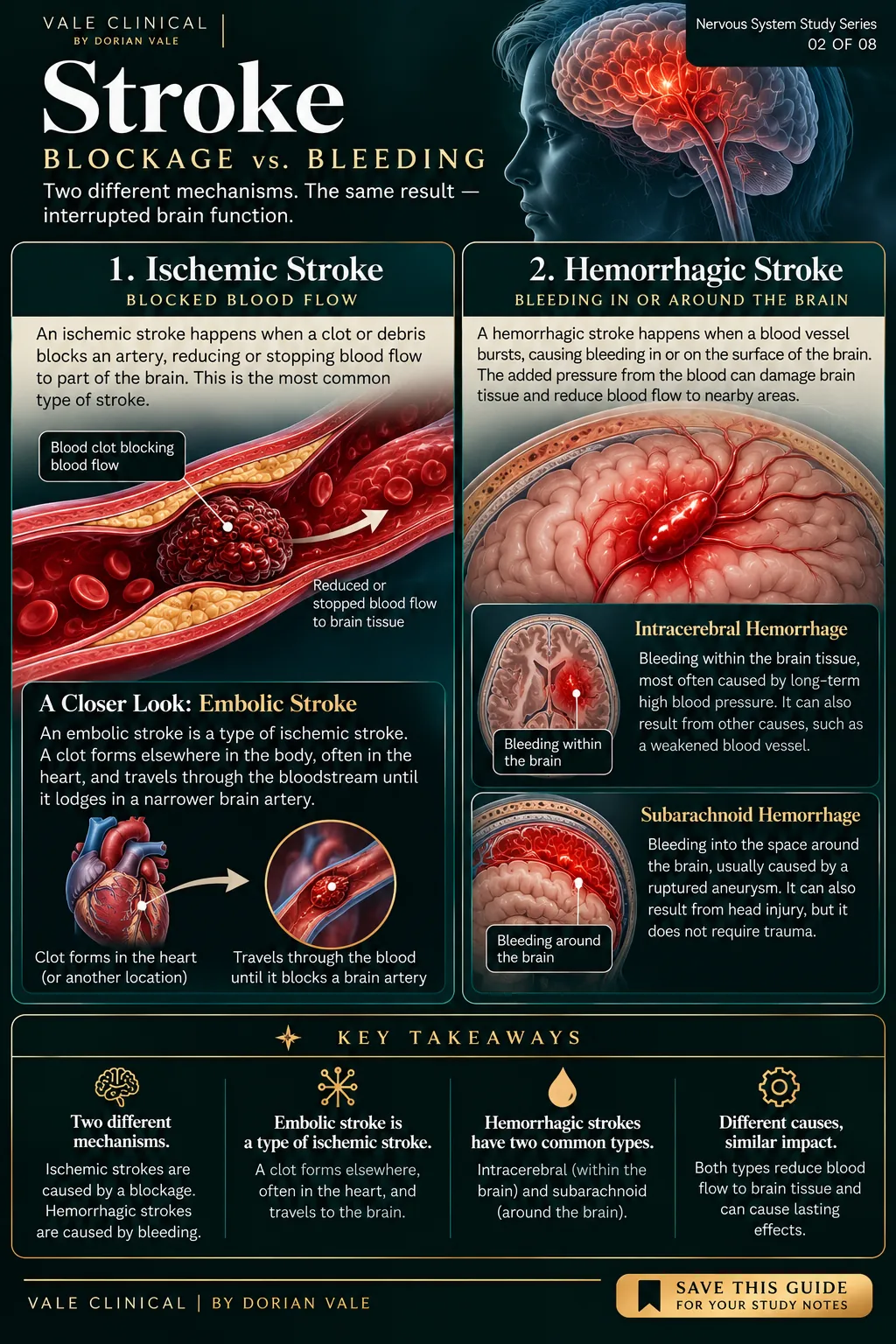
Every stroke starts in one of two ways. An ischemic stroke is a blockage — a clot or debris plugs an artery — and most strokes are this type, while a hemorrhagic stroke is a bleed from a vessel that bursts in or on the surface of the brain.
Embolic stroke is one kind of blockage: a clot forms elsewhere, often in the heart, and travels until it lodges in a narrower artery. Hemorrhagic strokes split into intracerebral (bleeding within the brain) and subarachnoid (bleeding around it) — high blood pressure most often causes the first, and a ruptured aneurysm classically causes the second.
What to remember: Blockage and bleeding are different mechanisms. Embolic is one kind of blockage, not bleeding's opposite.
03 | Infection: How Can Infections Affect Different Parts of the Nervous System?
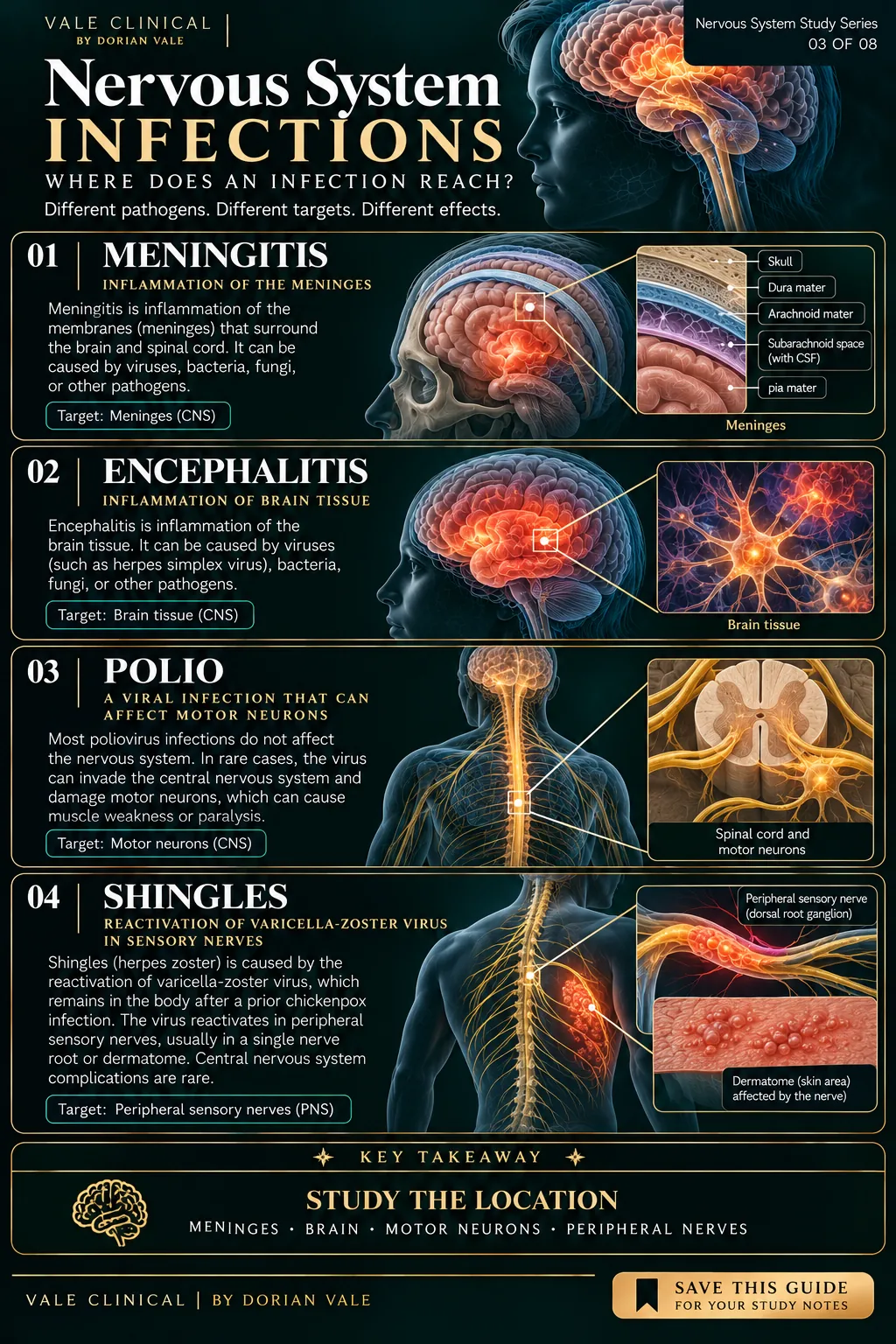
Meningitis is inflammation of the meninges, the membranes around the brain and spinal cord, and most U.S. cases are viral. Inflammation of the brain tissue itself is encephalitis, and herpes simplex virus is one of its most common identified causes.
Most polio infections never reach the nervous system, but when one does, the virus can destroy motor neurons in the spinal cord and brainstem, causing paralysis while sensation usually stays intact. Shingles is the outlier: varicella-zoster, the chickenpox virus, reactivates from nerve clusters outside the CNS and only very rarely leads to brain inflammation. Varicella-zoster and herpes simplex are both herpesviruses, so "herpes" on a study chart deserves a second look.
What to remember: Name the location first: coverings, brain tissue, motor neurons, or peripheral nerves. That's what shapes the illness.
04 | Neoplastic Disease: Why Location Matters as Much as "Benign"
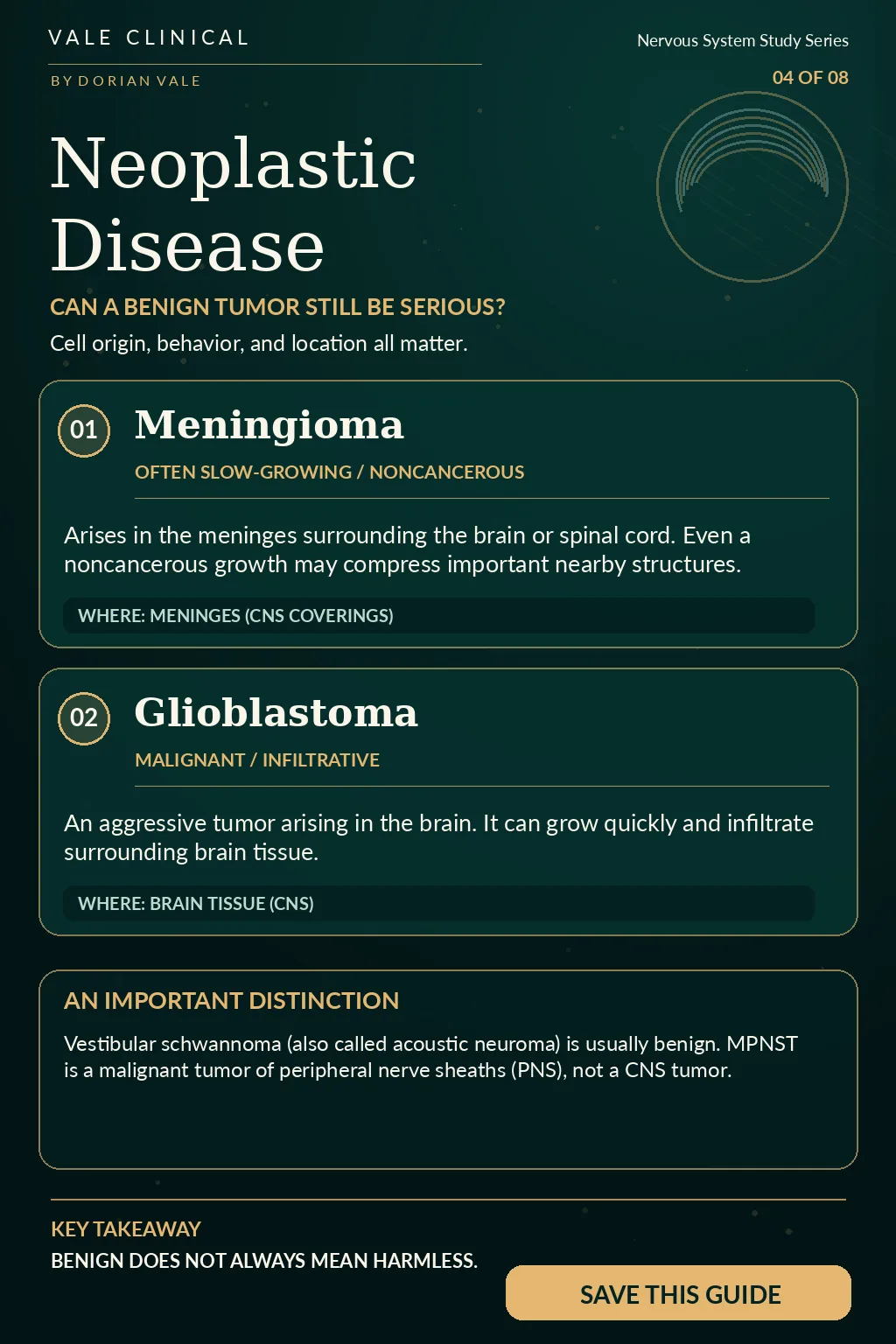
A benign tumor is noncancerous, but its size and location can still matter: inside the skull, pressure on nearby structures may cause serious problems. Malignant tumors are cancerous and can invade surrounding tissue. A tumor’s classification depends on its type and location, not just how frightening its name sounds.
Meningiomas arise from the meninges and are often slow-growing, while glioblastoma is an aggressive brain tumor that can infiltrate nearby tissue. Older study charts may use imprecise labels. “Acoustic neuroma” is another name for a vestibular schwannoma, usually a benign tumor on a cranial nerve; a malignant peripheral nerve sheath tumor (MPNST) arises from peripheral nerve coverings outside the CNS. These conditions are not interchangeable.
What to remember: Benign isn't harmless inside the skull. Learn the cell type, the behavior, and the location together.
05 | Degenerative Disease: What Happens When Nerve Cells Gradually Lose Function?
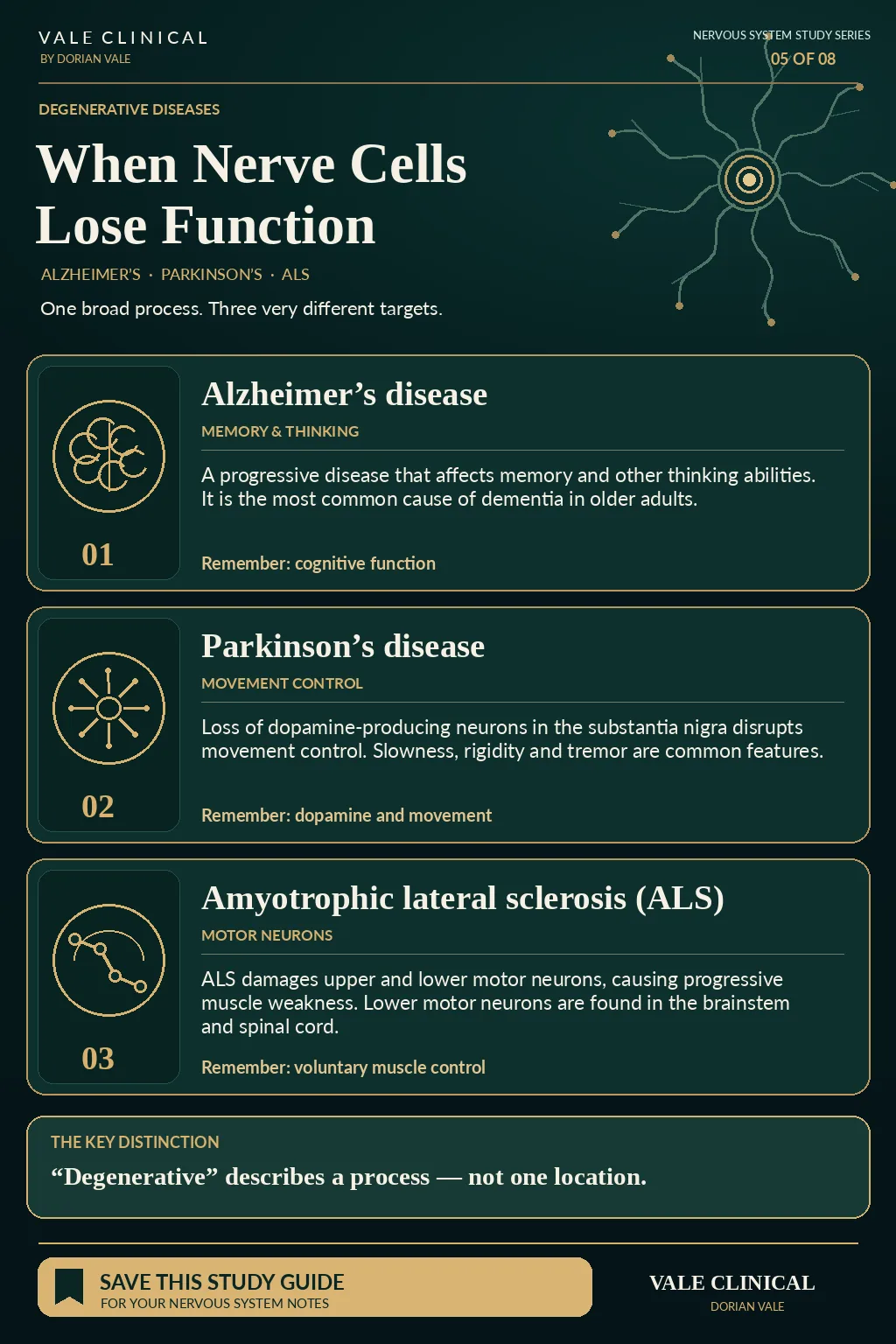
Degenerative diseases share a process — nerve cells gradually lose structure or function — but not a target. Alzheimer's disease slowly destroys memory and thinking skills and is the most common cause of dementia in older adults, while Parkinson's symptoms come from the loss of dopamine-producing neurons in the substantia nigra, a brain area involved in movement.
ALS damages the motor neurons themselves — upper motor neurons in the brain and lower motor neurons in the brainstem and spinal cord — so voluntary muscles weaken and waste away. One category, three targets: thinking, movement control, and the motor neurons that carry the command.
What to remember: "Degenerative" names the process, not the place. Pin each disease to its target.
06 | Autoimmune Disease: What Happens When the Immune System Targets Nerve Signals?
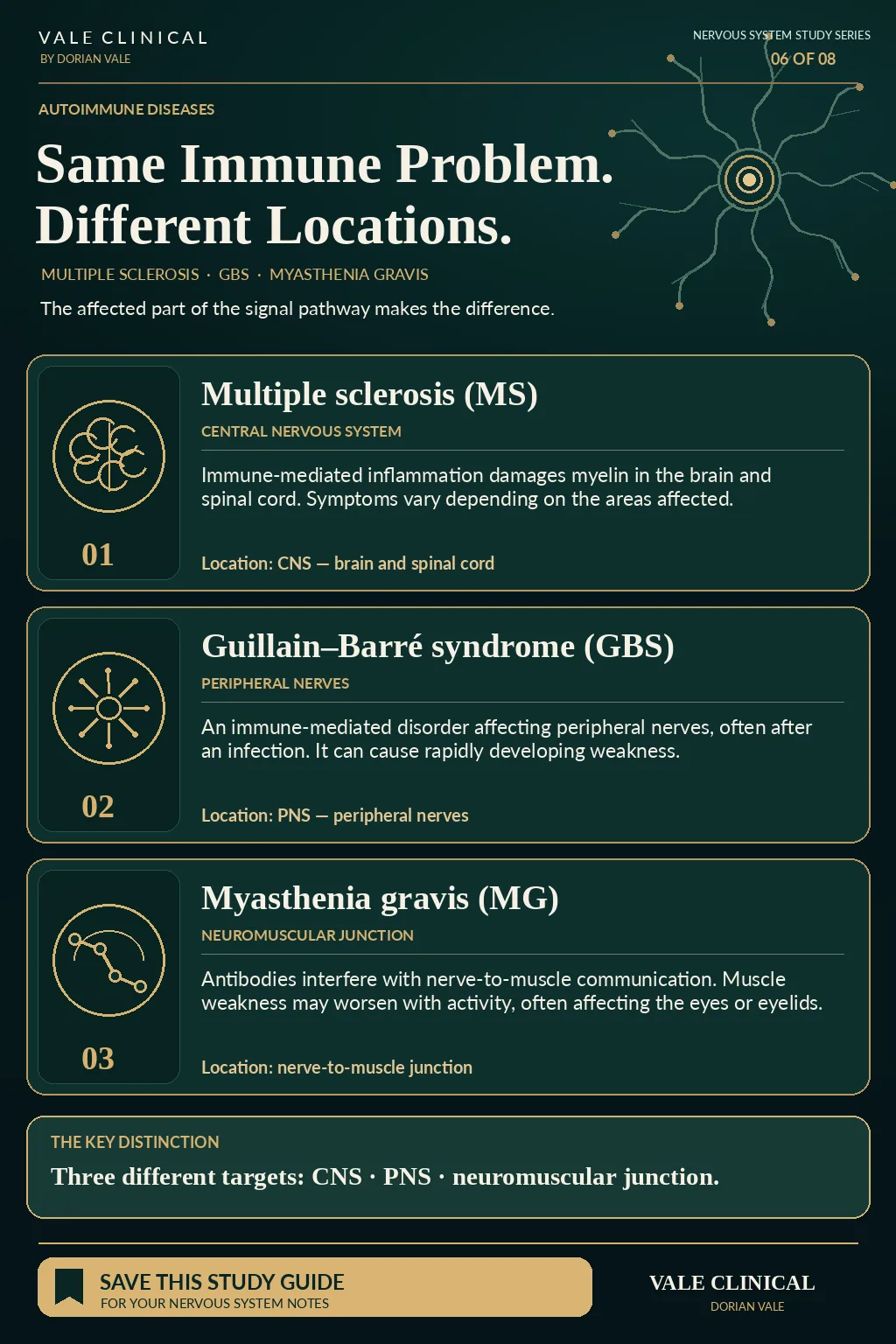
Multiple sclerosis is an immune attack on myelin in the central nervous system, and most people are first diagnosed with the relapsing-remitting form. Guillain-Barré syndrome is a rare attack on the peripheral nerves, usually days or weeks after an infection; most people recover fully, though some are left with lasting weakness.
Myasthenia gravis happens at the handoff, where antibodies block, alter, or destroy the acetylcholine receptors that let a nerve signal a muscle. The result is muscle weakness that often includes the muscles moving the eyes and eyelids.
What to remember: Same immune mistake, three addresses: the CNS for MS, the peripheral nerves for GBS, the junction for MG. Location is what separates them.
07 | Developmental and Related Conditions: Why Does Timing Matter?
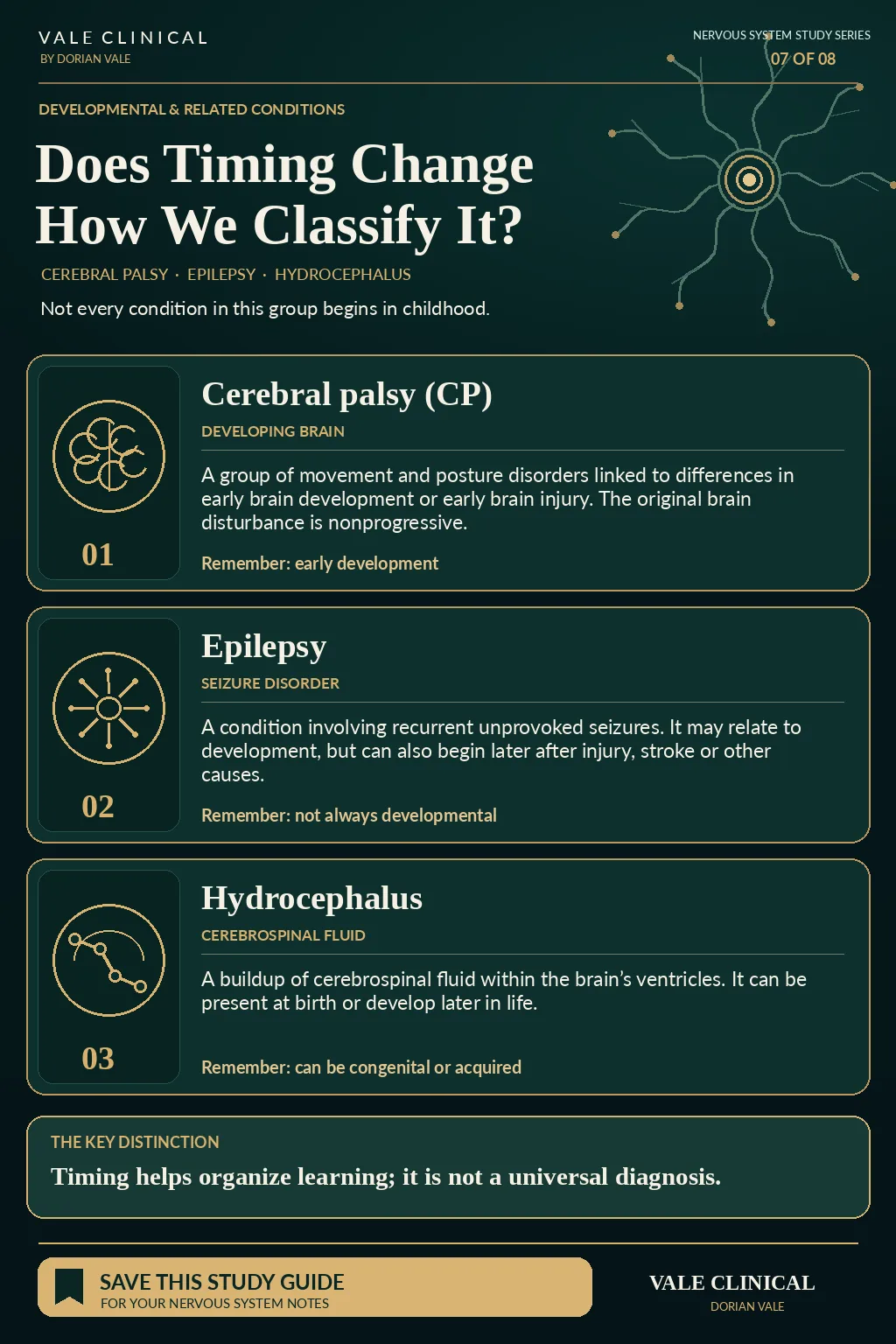
Cerebral palsy is a group of disorders affecting movement, balance, and posture, caused by abnormal brain development or damage to the developing brain. Most cases begin before or during birth, and the condition doesn't worsen over time, though its effects last a lifetime.
Epilepsy belongs here with an asterisk: it can be linked to brain development, but it can also follow head trauma, stroke, or infection. Hydrocephalus, an abnormal buildup of cerebrospinal fluid in the brain, is similar: some babies are born with it, and others develop it later after an injury.
What to remember: "Developmental" describes when a problem starts. Cerebral palsy fits cleanly; epilepsy and hydrocephalus can begin later.
08 | Psychiatric Illness: How Does the Brain Relate to Mood, Thinking, and Behavior?
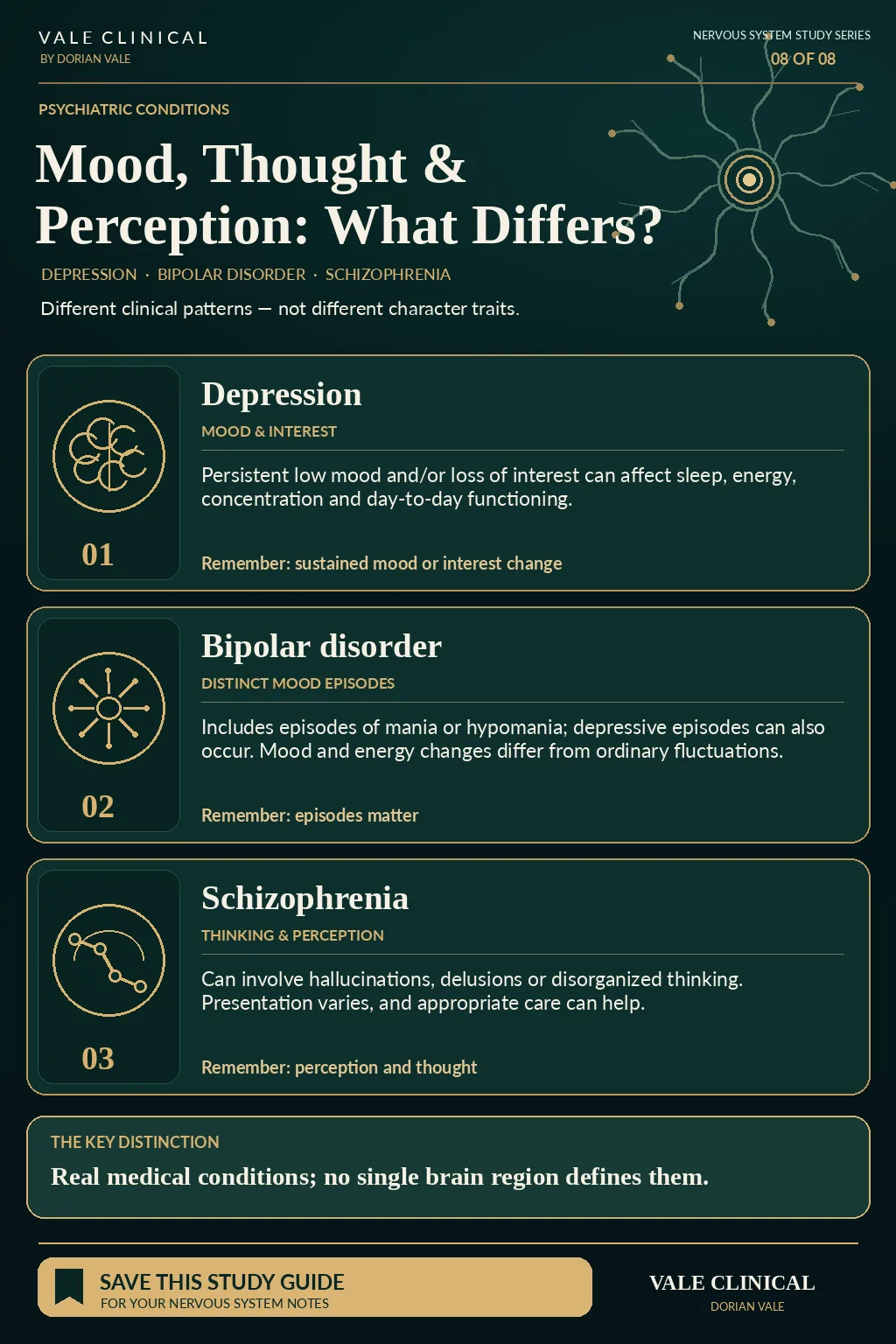
Depression affects how a person feels, thinks, and handles daily activities, while bipolar disorder brings clear shifts in mood and energy, from manic or milder hypomanic episodes to depressive ones. Schizophrenia is a serious mental illness that affects how a person thinks, feels, and behaves, and it's usually first diagnosed between ages 16 and 30.
These conditions involve the brain, but they don't trace back to one damaged structure the way a stroke or a tumor can. Research points to a mix of genetic, biological, environmental, and psychological factors — and language matters too: "a person with schizophrenia," not "a schizophrenic."
What to remember: Psychiatric conditions are medical conditions, not character flaws. Learn their defining features, not a single location.
How to Study Nervous System Disorders Without Memorizing Everything at Once
It all comes down to one rule you can repeat in the minute before an exam: Label it before you learn it. Start every condition with three questions.
- Where does it primarily affect the nervous system? The brain and spinal cord, the peripheral nerves, or the junction where nerve meets muscle.
- What broad process is involved? Injury, blood flow, infection, abnormal growth, degeneration, immune activity, development, or something else.
- What one distinction separates it from similar conditions? Blockage versus bleed, myelin versus junction, benign versus malignant.
These are study questions, not clinical ones: they're for organizing notes, never for deciding what's wrong with a patient. Answer all three, and every new detail has a place to land.
Noticing the Mismatch Is Progress
Some of what you just read probably didn't match the chart you've been highlighting, and that isn't a setback. Spotting a "CNS disorder" that actually lives in the peripheral nerves is the same habit as checking a tube label against a wristband before a specimen leaves the room. Answer these tonight, then take the mismatches to your instructor.
- Which of these conditions would I have filed in the wrong place before today?
- Can I name the location, process, and one key distinction for a condition in each category?
- Where else am I memorizing lists I've never actually labeled?
Back at the Kitchen Table
The next time that textbook box is open under the kitchen light, it won't read like a grocery list. It'll read like a rack of labeled tubes: eight categories, three locations, and one distinction that sets each condition apart.
Explore more Vale Clinical study resources designed to help healthcare students organize complex information and approach their learning with greater clarity. If you're training in phlebotomy, Phlebotomy: The Veteran's Field Manual covers the hands-on side of the work.
Label it before you learn it. The details will follow.
Educational overview only — not medical advice or a diagnostic tool. Sources checked October 2026; follow your program and instructors for anything clinical.
Sources and further reading
Primary medical references accompanying the article draft, as documented in the supplied publishing package. Links should be rechecked before publication.
- About Mild TBI and Concussion · CDC
- Traumatic Brain Injury · NINDS
- Subdural Hematoma · MedlinePlus
- Subarachnoid Hemorrhage · MedlinePlus
- Cerebral Aneurysms · NINDS
- Stroke Overview · NINDS
- Stroke: Hope Through Research (PDF) · NINDS
- Hemorrhagic Stroke · MedlinePlus
- Intracerebral Hemorrhage (image page) · MedlinePlus
- Meningitis · NINDS
- Encephalitis · NINDS
- About Polio · CDC
- Poliomyelitis, Pink Book chapter 18 · CDC
- About Shingles · CDC
- Shingles Symptoms and Complications · CDC
- Clinical Overview of Shingles · CDC
- Adult Central Nervous System Tumors Treatment (PDQ), Patient Version · NCI
- Brain and Spinal Cord Tumors · NINDS
- Vestibular Schwannoma (Acoustic Neuroma) · NIDCD
- Acoustic Neuroma · MedlinePlus
- Morton Neuroma · MedlinePlus
- Malignant Peripheral Nerve Sheath Tumor · NCI
- Malignant Peripheral Nerve Sheath Tumor · NIH GARD
- Alzheimer's Disease Fact Sheet · NIA
- Parkinson's Disease · NINDS
- Amyotrophic Lateral Sclerosis · NINDS
- Motor Neuron Diseases · NINDS
- Multiple Sclerosis · NINDS
- Guillain-Barré Syndrome · NINDS
- Myasthenia Gravis · NINDS
- About Cerebral Palsy · CDC
- Epilepsy and Seizures · NINDS
- Hydrocephalus · NINDS
- Depression · NIMH
- Bipolar Disorder (topic page) · NIMH
- Bipolar Disorder (publication) · NIMH
- Schizophrenia · NIMH
📘 Continue Learning Beyond the Article
Explore The Veteran's Field Manual for deeper lessons on needle depth, interrupted blood flow, vein assessment, and clinical judgment.
Want both guides? Get the Field Manual plus How Did You Know the Vein Was There? for $14.99.
Explore the Phlebotomy Student Bundle — $14.99Educational disclaimer: This article is supplemental educational information and does not replace accredited training, current professional standards, institutional procedures, or supervised clinical instruction. Read the full disclaimer.
Related Articles

Clinical Mindset
The 0.05-Second Thought That Makes Phlebotomy Students Miss
The median cubital is sitting right under your index finger — full, springy, the kind of vein your instructor would tap and call a gift. The tourniquet is…
Read Article →Clinical Techniques
The Anchor Mistake Students Don’t Notice Until It’s Too Late
How many times have you said those two words this month? The vein looked perfect, your angle felt right, and the moment the bevel touched it, the vein slid sideways like it had…
Read Article →
Clinical Techniques
The Wrist Freeze That Causes Students to Miss Veins
Your instructor demonstrates on the practice arm with the needle held so loosely it looks like it might slip out of her fingers. Her shoulders are down, her elbow hangs easy,…
Read Article →