Clinical Mindset
Clinical Conversation No. 8
Most Students Blame the Angle. The Anchor Was the Real Problem.
By Dorian Vale · 4 min read
Published for Phlebotomy Students and Future Clinicians
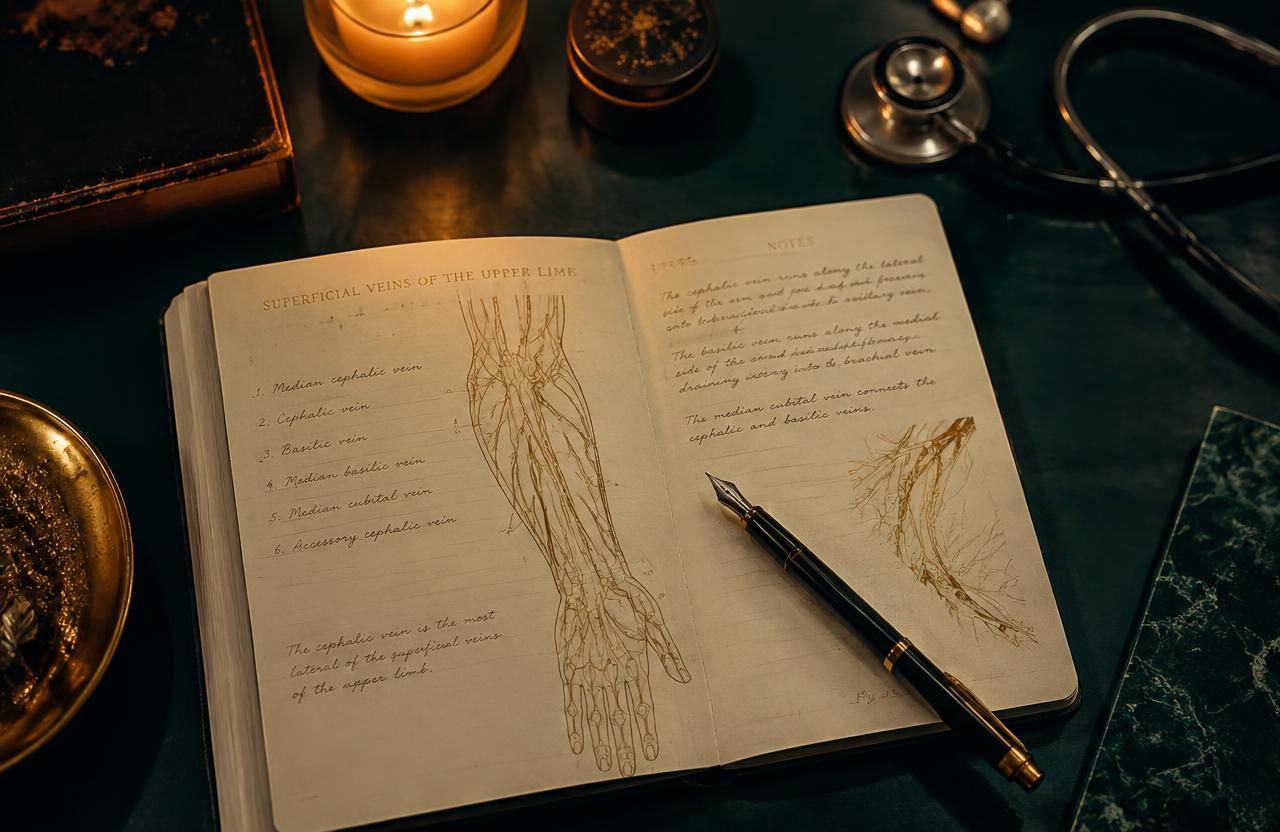
What Did You Blame Last Time?
Think back to your last missed draw and the explanation you gave afterward, out loud or just to yourself. For most students, it’s some version of the same sentence: “My angle was off.”
It’s an easy answer, because the angle is the thing you were staring at when it went wrong. You saw the needle drift, you felt the path change, and the miss happened right there in front of you.
But the angle is often just the place where the problem became visible. It wasn’t the angle that failed. It was what the angle was resting on.
The Frame on the Loose Nail
Picture a framed photo hanging on a wall from a nail that’s working loose. Every time you walk past, the frame is tilted, so you straighten it — and a day later it’s crooked again.
You can straighten that frame a hundred times and never fix anything, because the frame was never the problem. The angle is usually the last thing that changed, which is exactly why it gets blamed first.
Why the Angle Takes the Blame
During insertion, your eyes and attention are locked on the needle. Your anchor hand is working at the edge of your awareness, which means you don’t remember much about what it did — and you can’t blame something you don’t remember.
Meanwhile, a quiet chain reaction can run underneath. The thumb softens slightly, the skin shifts, the vein moves a few millimeters, and your wrist adjusts to follow it; by the time the needle’s path visibly changes, the real cause happened two or three steps earlier.
Your instructor often sees the same thing you do. They’re watching the needle too, so the feedback you get — “watch your angle” — can confirm the wrong diagnosis instead of correcting it.
Fixing the Wrong Thing
A misdiagnosed miss sends you off to practice the wrong skill. You spend a week being extra careful with your angle, and the misses keep happening in exactly the same way, because the loose nail is still loose.
That’s where the real damage happens. When a fix doesn’t work, students rarely question the diagnosis — they question themselves, and “I keep messing up my angle” slowly turns into “maybe I’m just not good at this.”
Trace It Back
After a miss, don’t start with the needle. Start at the anchor and work forward, asking three questions in this order.
1. What did the vein do — stay put, slide, or flatten?
2. What was my thumb doing at that moment — the same pressure, softer, or gone?
3. Did I change the angle on purpose, or did my wrist change it for me?
If the vein moved and your thumb softened, the angle was a symptom. Trace every miss back to the first thing that changed, and fix that — not the last thing you happened to see.
The One-Minute Debrief
A good diagnosis takes about a minute, and it only works if you do it soon after the draw. Use these steps every time something doesn’t go as planned.
- Patient first: finish the patient’s care completely — pressure, bandage, labels — before you think about what went wrong.
- Replay from the anchor forward: start your mental replay with your thumb placement, not with the needle entering the skin.
- Write one line: “First thing that changed: ___.” A single honest sentence is more useful than a page of worry.
- Ask a better question: instead of “was my angle off?” ask your instructor, “did you see my anchor hand move?” That points their attention where yours couldn’t be.
- Tally it for a week: mark each miss as anchor, angle, depth, or patient movement. Patterns show up quickly once you’re counting.
Asking Why Is the Skill
If you’ve ever replayed a miss trying to figure out what happened, you’re already thinking like a clinician. The only change is where you start looking — and that’s a much smaller fix than it feels like at the end of a hard shift.
Sit with these after your next miss, once the patient has gone. They’re about your habits, not about any single draw.
When I missed last, what was the first thing I blamed?
Have I ever fixed my angle and still missed the same way?
Who could watch my anchor hand on my next supervised draw?
Save This for Your Next Debrief
Save this article and pull it up the next time a draw goes sideways and your first thought is “my angle.” Before you straighten the frame again, check the nail.
Anchoring, angle, and the chain between them are laid out step by step in Phlebotomy: The Veteran’s Field Manual. Understanding how each step depends on the one before it is what turns a miss into a lesson instead of a mystery.
📘 Phlebotomy: The Veteran’s Field Manual
https://dorianvaleclinical.etsy.com/listing/4520590773
Don’t fix the last thing you saw. Fix the first thing that changed.
Educational disclaimer: This article is supplemental educational information and does not replace accredited training, current professional standards, institutional procedures, or supervised clinical instruction. Read the full disclaimer.
Related Articles
Clinical Mindset
The Depth Panic Mistake That Causes Students to Miss Perfect Veins
Before your last draw, could you have answered that question? Not in general terms from a textbook, but for that specific vein, in that specific arm, right before the needle…
Read Article →
Clinical Mindset
When One Correction Becomes Five
The tube is filling, just slower than you’d like, so you advance the needle a hair. The flow stops completely.
Read Article →
Clinical Mindset
A Missed Vein Is an Event, Not an Identity
The draw is over, the patient is gone, and you’re in the supply room restocking gauze that didn’t really need restocking. Your instructor already said “it happens” and moved…
Read Article →