Clinical Mindset
Clinical Conversation No. 13
When One Correction Becomes Five
By Dorian Vale · 5 min read
Published for Phlebotomy Students and Future Clinicians
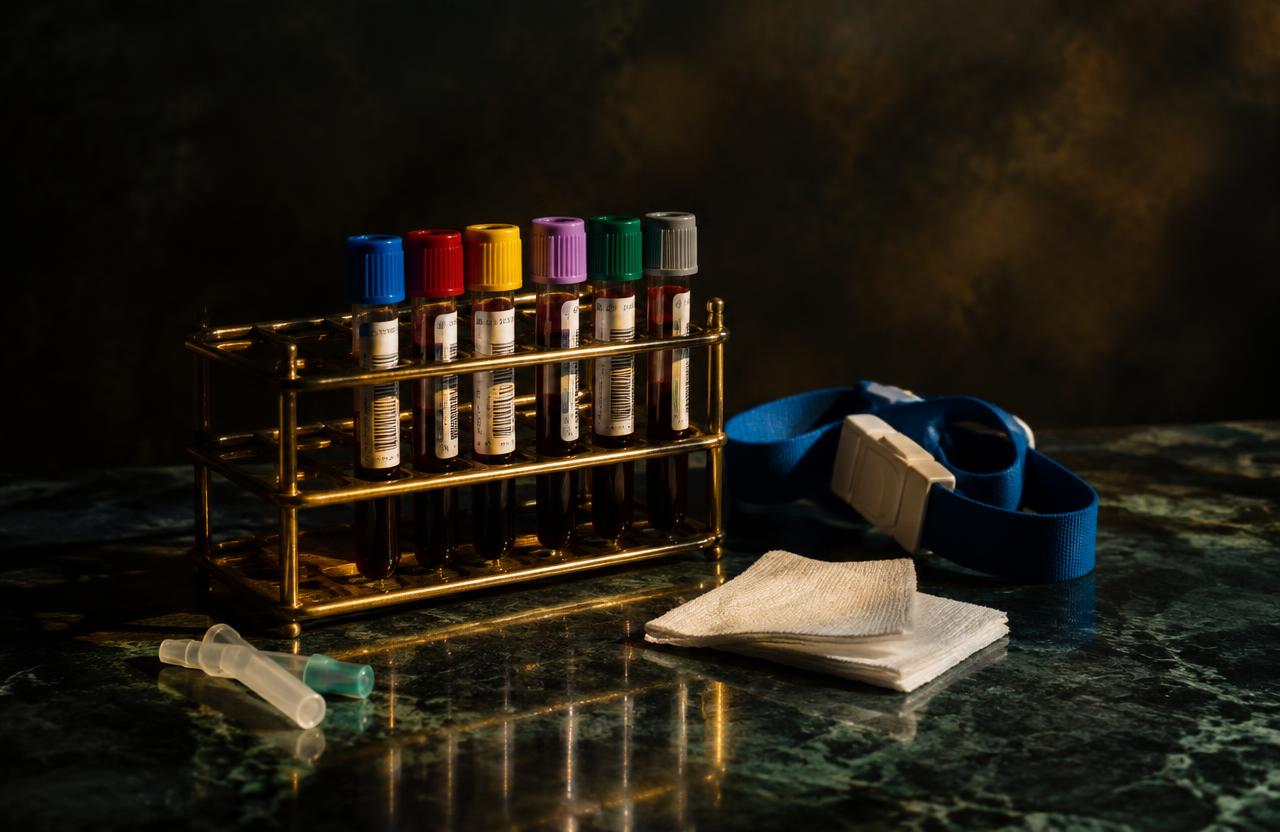
One Small Problem
The tube is filling, just slower than you’d like, so you advance the needle a hair. The flow stops completely.
You pull back a little and a thin trickle starts, so you lower your angle to help it along — and it stops again. Somewhere in the last ten seconds your anchor drifted, the patient’s fingers tightened around the armrest, and you can no longer remember exactly where the needle was when the blood was flowing.
Ten seconds ago you had one small problem. Now you have four, and you made three of them.
The Jenga Tower
Late in a game of Jenga, the tower starts to lean. The nervous player grabs the first loose-looking block and yanks it to fix the lean, then another, and every hurried pull makes the tower sway a little harder.
Every correction is another block pulled from the same tower — and the player who wins is the one who stops, studies the tower, and makes one careful move. Speed was never the problem; unread moves were.
That’s the trap inside a draw that starts to slip. The second correction usually isn’t fixing the original problem — it’s fixing the first correction.
Why Your Hands Won’t Wait
Under pressure, doing something feels better than doing nothing, even when nothing is the better choice. Researchers who studied professional soccer goalkeepers facing penalty kicks found they almost always dive to one side, even though staying in the center would have stopped more shots — because getting scored on while standing still feels worse than getting scored on mid-dive.
A draw that’s slipping creates the same pull. There’s a patient in the chair, maybe an instructor at your shoulder, and a tube that isn’t filling, and your hands start moving because your mind wants the discomfort to end — not because it has worked out what’s wrong.
That’s why the spiral feels like effort and problem-solving from the inside. It is real effort, but it’s aimed at the feeling instead of the draw.
Losing Your Reference Point
After one correction, you still roughly know where the bevel is sitting. After three, you don’t, which means even good information becomes useless — a trickle of flow could mean you’re nearly there or barely hanging on, and you can no longer tell which.
From that point, every move is a guess stacked on a guess. The tissue takes the damage, a hematoma becomes more likely, the patient’s discomfort climbs, and the attempt usually ends anyway — just later, and harder on everyone.
The habit follows you to the next draw, too. Once your hands learn to search under pressure, searching becomes the first thing they reach for.
Pause. Read. Correct Once.
The moment a draw starts to slip, run three steps in this order. They’re simple on purpose, because you’ll need them when your mind is at its noisiest.
Pause. Hold both hands still for one breath. It isn’t a long pause or a dramatic one — just long enough to stop the second move before it starts.
Read. Work out what changed first: the patient’s arm, your anchor, the tube, or the flow. The correction has to match the cause, so the hand doesn’t move until the mind knows what it’s fixing.
Correct once. If a correction is appropriate within your training and facility policy, make one small, controlled move, then watch what happens. If control doesn’t come back, stop — stopping isn’t failure; it can be the safest decision in the room.
Breaking the Spiral Mid-Draw
A rule is easier to follow when your body has a few habits built around it. Practice these until they happen on their own.
- Freeze, then breathe: the instant the draw changes, hold both hands still for one breath before anything moves.
- Name the change in a few words: “flow slowed,” “patient moved,” “swelling starting.” A named problem is easier to match with the right fix.
- Suspect your last move first: if things got worse right after you adjusted, that adjustment is the most likely cause.
- Give one correction time to work: watch the tube for a few seconds before deciding it failed. If you catch yourself reaching for a second correction, that’s your signal to stop.
- Say it out loud: tell your instructor, “I’m going to stop and reassess.” Saying it breaks the spiral and brings help closer.
None of these take more than a breath. Together, they keep one small problem from turning into five.
One Problem Doesn’t Need Five Fixes
If you’ve ever spiraled, it’s because you refused to give up on the patient in front of you. That determination is worth keeping — it just needs a calmer first move.
Answer these after your next draw that doesn’t go to plan. They’re about your habits under pressure, not about any single attempt.
When the draw started slipping, was my first move a pause or an adjustment?
How many corrections did I make before I stopped to read what was happening?
By the end, was the problem I was fixing still the one I started with?
Next: When the Miss Follows You
One problem needs one clear read, not five quick fixes. Pause, read, and correct once, and most draws that start to slip either recover or end cleanly and safely.
But even a draw that ends cleanly can leave a mark. The next Clinical Conversation is about what a miss does after it’s over — the quiet verdict it asks you to reach about yourself, and why that verdict is almost always wrong.
Until then, the full venipuncture sequence — and how to troubleshoot a draw without losing your place in it — is laid out step by step in Phlebotomy: The Veteran’s Field Manual. A sequence you know well is the easiest one to return to under pressure.
📘 Phlebotomy: The Veteran’s Field Manual
https://dorianvaleclinical.etsy.com/listing/4520590773
One problem. One read. One correction.
Educational disclaimer: This article is supplemental educational information and does not replace accredited training, current professional standards, institutional procedures, or supervised clinical instruction. Read the full disclaimer.
Related Articles
Clinical Mindset
The Depth Panic Mistake That Causes Students to Miss Perfect Veins
Before your last draw, could you have answered that question? Not in general terms from a textbook, but for that specific vein, in that specific arm, right before the needle…
Read Article →Clinical Mindset
Most Students Blame the Angle. The Anchor Was the Real Problem.
Think back to your last missed draw and the explanation you gave afterward, out loud or just to yourself. For most students, it’s some version of the same sentence: “My angle…
Read Article →
Clinical Mindset
A Missed Vein Is an Event, Not an Identity
The draw is over, the patient is gone, and you’re in the supply room restocking gauze that didn’t really need restocking. Your instructor already said “it happens” and moved…
Read Article →