Clinical Mindset
Clinical Conversation No. 17
Your Body Knew Before You Did
By Dorian Vale · 4 min read
Published for Phlebotomy Students and Future Clinicians
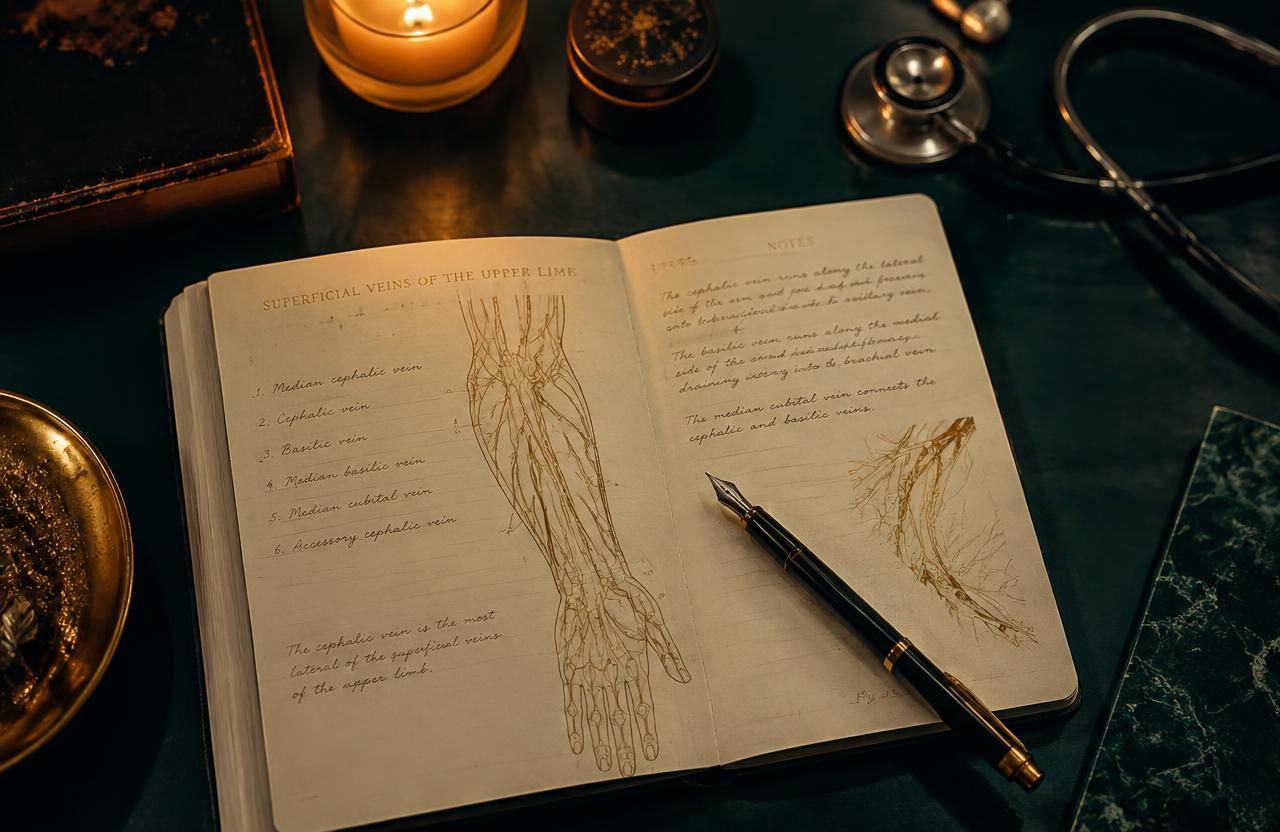
Before Anything Happened
Has your heart ever started racing before you’d even touched the patient’s arm? The tourniquet was still on the tray, the needle was still in its package, and the patient was sitting calmly, waiting.
Nothing had happened yet. But your breathing had gone shallow, your shoulders had crept up toward your ears, and your fingertips felt cold — your body had already decided the procedure was underway.
The Smoke Alarm
Most kitchens have a smoke alarm that goes off every time someone burns the toast. The alarm is real and loud and urgent, but there’s no fire — so you wave a towel, open a window, and keep making breakfast.
Most students believe calm clinicians simply don’t feel this alarm. The truth is they feel it too — they’ve just stopped treating every alarm as a fire.
That’s the shift worth making. A racing heart isn’t a prediction. It’s preparation.
Your Body Moves First
Your nervous system is built to get ready before something important happens, and it often starts before your mind has caught up. Your heart speeds up, your breathing changes, and blood shifts away from your hands toward your larger muscles — which is why nervous fingers so often feel cold.
Then your thoughts arrive and try to explain the feeling: “what if I miss,” “what if they move,” “what if I hurt them.” Students usually assume those thoughts caused the nerves, but often the body went first and the thoughts just gave the feeling a story.
That’s where the loop starts. You notice the tension, assume it means something is wrong, become more cautious, and your body reads that caution as proof it was right to sound the alarm — so it turns the volume up.
Many students then make the most understandable mistake of all: they wait to feel calm before they begin. But waiting gives the alarm more time to grow, and calm rarely arrives on its own while you’re standing still.
The Alarm Check
When the alarm goes off before a draw, don’t argue with it and don’t obey it. Check it, with three questions.
1. Has anything actually happened yet?
2. Is there real smoke — something genuinely wrong with the patient, the site, or my setup?
3. Can this energy be readiness instead of fear?
The third question matters more than it sounds. Researchers have found that people who reframe pre-performance nerves as energy — “this is my body getting ready” — tend to perform better than people who try to force themselves calm. You don’t have to get rid of the feeling; you just have to stop reading it as a warning.
Settling the Alarm
These take seconds, and they work on the body directly instead of trying to reason with it. Use them in the moments before you reach for the tourniquet.
- Name it plainly: “Heart’s fast, hands are cold.” Naming a sensation as a sensation, not a prediction, takes some of its power away.
- Exhale longer than you inhale: one or two slow breaths where the out-breath is longer than the in-breath. It’s one of the quickest ways to ease a racing heart.
- Unclench: let your jaw loosen and your shoulders drop. Tension tends to collect in the same few places, and you can let it go on purpose.
- Warm cold hands before you glove: rub them together or warm them before your shift. Warm fingertips feel veins better than cold ones.
- Begin when you’re present, not when you’re fearless: if the check says there’s no real smoke, start. The feeling usually settles once your hands have something to do.
The Alarm Means You Care
If your body sounds the alarm before every draw, it isn’t a sign you’re in the wrong field. It’s a sign your body knows this matters — and the clinicians you admire still feel it, years in. The difference is that it no longer gets to drive.
Answer these after your next few draws. They’ll help you learn what your own alarm sounds like.
Where did I feel the nerves first — my chest, my hands, my breath, or my stomach?
Did I wait to feel calm before starting, or start once I was present?
What did my nerves predict would happen — and did it?
Next: When Nerves Find Your Voice
Your body will keep getting ready before important moments, and that’s a good thing. Check the alarm, settle what you can, and begin — the alarm doesn’t have to go quiet for you to do good work.
Sometimes, though, those nerves don’t stay in your body. The next Clinical Conversation is about what happens when they leak into your words — and why one small word, said too often, can make a patient more anxious instead of less.
Until then, the steady, repeatable technique that gives your hands something solid to do is laid out step by step in Phlebotomy: The Veteran’s Field Manual. A process you trust is one of the best answers to an alarm that won’t stop ringing.
📘 Phlebotomy: The Veteran’s Field Manual
https://dorianvaleclinical.etsy.com/listing/4520590773
The alarm is real. The fire usually isn’t.
Educational disclaimer: This article is supplemental educational information and does not replace accredited training, current professional standards, institutional procedures, or supervised clinical instruction. Read the full disclaimer.
Related Articles
Clinical Mindset
The Depth Panic Mistake That Causes Students to Miss Perfect Veins
Before your last draw, could you have answered that question? Not in general terms from a textbook, but for that specific vein, in that specific arm, right before the needle…
Read Article →Clinical Mindset
Most Students Blame the Angle. The Anchor Was the Real Problem.
Think back to your last missed draw and the explanation you gave afterward, out loud or just to yourself. For most students, it’s some version of the same sentence: “My angle…
Read Article →
Clinical Mindset
When One Correction Becomes Five
The tube is filling, just slower than you’d like, so you advance the needle a hair. The flow stops completely.
Read Article →